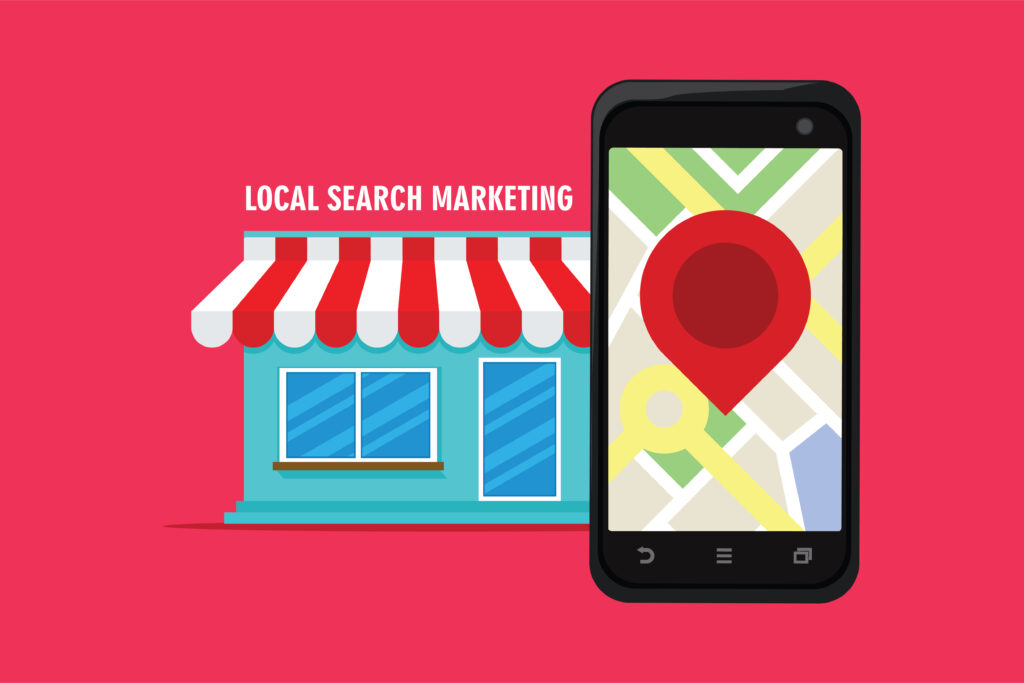
The New Google Places Dashboard

Google recently announced that they would be making significant updates in the Google Places user dashboard, but so far, the attitude shared among businesses on Google Places is generally unimpressed. Unfortunately for Google Places users and developers alike, it seems to be too early to judge whether or not the changes can be considered an improvement. While the verdict remains undecided, here are a few things you should keep in mind when exploring the updated Google Places dashboard:

The updated dashboard is immediately available to newly created and newly verified business locations in the United States. Existing users will have to remain patient for the updates to be rolled out to older verified listings.  For the time being, availability is limited to locations within the United States.

This new dashboard has severely improved the relationship between Google Places and Google+ Local listings. Now data from your Google Places listing is fed directly into the Google Knowledge Graph, making it easier to manage across Google apps. At the same time, Google is advising businesses to not merge their Google Places and Google+ Local pages just yet. The plan seems to be to eventually implement an “Upgrade” option to make the merge and data migration as simple as possible.

The new dashboard interface advises users with tips for completing the fields of their listing; however, there has also been a decrease in number of overall fields, meaning less options for customization. On the other hand, Google is adding new listing options for service area businesses for the first time.

All updates made through the new Google Places dashboard should be reflected live within 48 hours; however, anticipate photo updates to take longer, and users will now be required to use a personal Google+ account in order to add video content to their listing.

A bone of contention among users who already have access to this new dashboard is that the analytics reported on Google+ listings are still weak and in need of improvement; however, search engine experts are advising patience. It seems as though this is just the first phase of SEO-friendly updates being rolled out by Google, and users should anticipate greater improvements over time.

Diving into Spring Premieres with Mobile Apps

It looks like brands aren’t the only things focusing on mobile development this year. With the third season premiere of the acclaimed HBO series, A Game of Thrones, just around the corner, fans can now delve even deeper into the world created by author George R. R. Martin with a mobile application: A World of Ice and Fire

This app, developed by Random House Digital, Inc., serves as an official companion to help fans of the television show and book of the same name stay on top of their favorite characters, important events, and plot developments throughout the series. The launch of the Android version of this app has expanded on the iOS version that was released last Fall; Apple device owners have been told to anticipate an app update soon.

Although A Game of Thrones is not the first television production to try to integrate mobile apps, it is unique in its effort to build a mobile presence exclusively for a show that does not take viewer feedback, unlike a reality or competition show. For the first time, fans can reconcile visuals from their favorite TV show with additional details from the book in one place. The interactive element of the app has the potential not only to engage existing fans, but also to lure in new ones who might have otherwise been intimidated by a long novel or complicated script.

This app may mark the start of a new trend in entertainment: interactive apps to keep fans engaged with the story even when it’s off the air. Soon it may become standard that every prime-time TV show includes a mobile companion app. After all, Internet and social media marketing have already proven that user engagement can often lead to long-lasting relationships. Time will tell if this also holds true in a more traditional marketing medium like television.

A Shift in Social Media Focus for 2013

Life on the web is fast paced. While Internet marketers are still adjusting to the most recent Google algorithm updates, they’re also forced to constantly refine their efforts, adapt to new white hat standards, and create quality content all while still being able to deliver measurable results.

In 2012, we saw a lot of updates and redesigns in the world’s most popular social networks. Social media gurus and Internet marketers alike are beginning to imagine and anticipate the innovative changes 2013 will bring to online communication and social media marketing. Here are a couple changes marketers predict businesses will be focused on during 2013 based on the last year:

Return on Investment

Many companies have a social media presence because it is considered a prerequisite to credibility in the big digital picture. Most brands on social networks understand the importance of maintaining open lines of communication with customers, earning likes or followers, and giving their fans exclusive content. Now, however, Internet marketers and brands are faced with the challenge of meeting more than the minimum standards for having a social media presence while making it profitable.

Mobile Optimization

Most consumers now own smartphones with all the apps necessary to consume your digital content through the palm of their hands, from any location. The ease of access and convenience of mobile applications means this is a side of your marketing strategy that cannot be ignored. Businesses need to focus not only on providing digestible content across multiple platforms, but also on creating exclusively mobile content to increase demand in their mobile presence.

Social Media Strategy: Influence Versus Control

Since advertising opportunities on social networking platforms were first realized, brands have aimed to walk a fine line between influencing potential customers and directing them. Influencing a consumer involves a suggestion — sometimes subtle, sometimes not –but directing a consumer is seen as an attempt by a brand to elicit a more controlled reaction.

Advertising is influential by nature, but brands whose approach is too aggressive are seen as attempting to be directors in the world of social media & are unlikely to succeed. This is not so much a flaw in their marketing strategy as it is a misunderstanding of social media from a consumer’s perspective. If your social media marketing efforts require consumers to react in a specific way in order to be successful, it’s time to go back to the drawing board.

A social media marketing campaign, which will inevitably revolve around creating or increasing revenue, should aim to start a conversation instead of a sale. “Start a conversation” is a commonly used phrase in the world of social media, but the value of its meaning is lost on many companies. The fact is that upwards of 70% of Internet users log onto social networks solely to communicate with friends or family. Many of these users are uninterested in interacting with brands directly.

Research from the social marketing firm Get Satisfaction shows that roughly 13% of users regularly seek to engage with brands on social networks. Regardless,  those same users are still four times more likely to go directly to a company’s website than a Facebook page for information about products and services. So how can brands hope to attract more customers through social media? It all comes back to starting a conversation.

Social network users are more likely to interact with a brand’s existing customers about a product than with the brand itself, particularly if the opportunity to chime into an existing conversation exists. If a brand or product is a hot topic among a user’s circles, friends, or followers on a major social networking site, the desired influence has been achieved.

The conversation does not need to lead to a sale in order to actively influence consumers, and brands who push to make a sale are more likely to find negative feedback infiltrating those very conversations. Once your brand has sparked a successful conversation on Twitter, Facebook, or other social networks — which may involve criticism as much as it may include praise — the next step is maintaining that level of influence so that you can eventually shift your focus to generating more sales.

Let the 2012 Olympic Games Begin!

Today begins the highly anticipated 2012 Summer Olympic Games. Although it won’t air in the U.S. for several hours still, more than 60,000 people were present at the main stadium in London to watch the opening ceremony — a three-hour production created by Oscar-winning director Danny Boyle — and there were more than a billion audience members who watched the live TV and Internet broadcasts.

Despite the anticipation surrounding today’s events, the media has been more focused on aspects of the Olympics outside the sports or the famous athletes participating. Much like major televised sporting events such as the World Cup or the Superbowl, a great deal of the conversation so far has revolved around the commercials aired during the time leading up to and throughout today. The event was called a “multi-million pound marketing bonanza” by UK journalist Meg Carter – a statement supported by the extravagant campaigns of major global brands.

For instance, as a few of the 11 official partners to the London Olympics 2012, Visa, Coca-Cola, and McDonald’s have spent roughly $100 million on their campaigns. Add to that the fact that these Games are being dubbed the very first “social media Olympics” and you can begin to imagine the scale of these campaigns beyond the sheer finances. Preparation for the 2012 Summer Games included not only the standard promoted Tweets and Facebook ads, but also a new approach to an advertiser’s mobile marketing strategy.

Through the efforts of these businesses, there are several mobile apps available for anyone remotely interested in the Games: The PlayUp app allows users to get real-time news feeds from the Olympics streaming to their devices, connect with friends, and find news pertaining to the user’s country’s team based on location; Reuters Olympics London 2012 is an app featuring photographs from the iconic moments that will inevitably take place; NBC Olympics offers more than standard coverage of the Games, allowing users to track teams, individuals, and medals won; OPlanner is the only one of these apps that is not free, but for only $0.99 users can access the most comprehensive 2012 Olympics application offering a schedule of events that can be searched by sport, time, and athlete’s gender.

Over the next two weeks as the world is watching the events of “London 2012,” you can turn to the resources offered through Best of the Web to avoid missing any monumental moments. Find information about the businesses making this year’s games tick, and what it takes to organize and host Olympic events from reliable sites listed in the UK Directory. Users can also subscribe, through the directory, to blogs and news feeds dedicated to covering every aspect of the Games from the sports themselves to interviews with champion athletes and even the attractions taking place outside the main stadium.

Next Page »